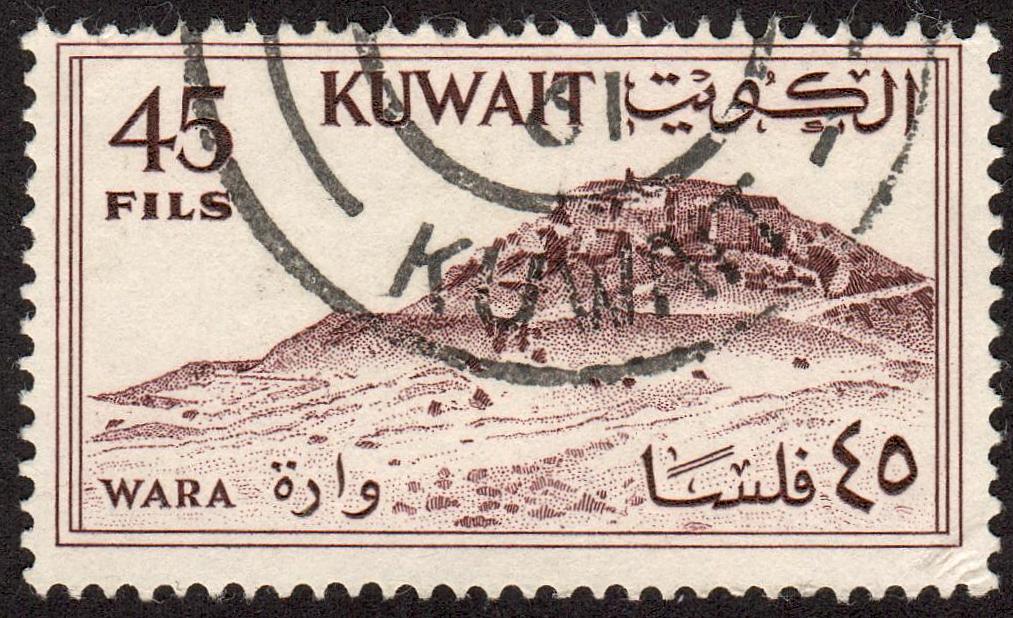
KUWAIT
/ الكويتDefinitive stamps.
Pipelines.
Fifth stamp in a set of 10, issued on 01.02.1959.
Face value: 50 Gulf naye paise.
Printing: Recess.
Catalogs
- Michel No. 137.
- Scott No. 147.
- StampWorld No. 137.
- Stanley Gibbons No. 138.
- Yvert et Tellier No. 135.
In
February 1938, the first oil fields were discovered in Burgan, south of
present-day Kuwait City,
and the oil refining industry began to develop after World War II, making the
country prosperous. Kuwait became independent from the United Kingdom on June
19, 1961, and since then has earned more than 75 percent of its revenue from
oil and natural gas exports. Before the British colonization, the Kuwaiti
territory had been occupied by the Greeks (since approximately 600 BC and for
three centuries they settled on Failaka Island), then
by the Persians until the year 623 when they were expelled by the Arabs. In the
16th century the territory became a Portuguese protectorate; At that time
several clans of the Anazah
tribe migrated to the northern shore of the Persian Gulf from the Najd in central Arabia and
established what is considered the first Kuwaiti state. Officially, however, according
to local sources, the country was founded in 1672. Kuwait was later
incorporated into the Ottoman Empire. In 1899, growing British influence caused
the country to become a British protectorate, which remained until 1961.